Spec Battle: Fujifilm X E5 vs Nisi V7 Filter Kit — Is It Worth Upgrading?
The world of photography often presents enthusiasts and professionals with a unique dilemma: do you invest in the brain of the operation—the camera body—or do you invest in the eyes—the glass and the filters that shape light before it ever hits the sensor? This debate has reached a fever pitch with the anticipated release and subsequent adoption of the Fujifilm X E5 and the simultaneous rise of high-end circular and square filter systems like the Nisi V7 Filter Kit. While comparing a camera body to a filter kit might seem like comparing an engine to a windshield, in the context of a photographer's budget and creative output, the decision often comes down to where the next significant "upgrade" should happen to yield the best results.
The Fujifilm X E5 represents the pinnacle of compact, rangefinder-style mirrorless technology, carrying forward a legacy of tactile controls and film-like color science. On the other hand, the Nisi V7 Filter Kit represents the gold standard in light manipulation for landscape, architectural, and long-exposure photographers. For those currently shooting with older gear or looking to take their craft to the next level, the question isn't just about which product is better, but which upgrade provides the most tangible benefit to their specific style of imagery. This article dives deep into the specifications, real-world performance, and hidden value of both these photographic powerhouses to determine where your investment truly belongs.
The Fujifilm X E5: A Compact Powerhouse
Fujifilm has long occupied a special niche in the hearts of street and travel photographers. The X E5 continues this trend by refining the "minimalist" approach to camera design without sacrificing the raw performance found in its larger siblings. At its core, the X E5 is built around the latest X-Trans CMOS sensor, offering a resolution that pushes the boundaries of APS-C capabilities. This sensor, combined with the high-speed processing engine, allows for lightning-fast autofocus that can track subjects with eerie precision, a massive leap over the previous generations.
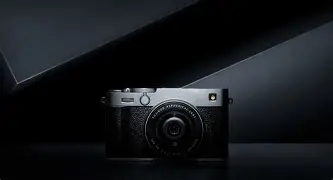
What makes the X E5 an "upgrade" for many is the inclusion of internal stabilization. For years, the X-E series was criticized for lacking In-Body Image Stabilization (IBIS), forcing photographers to rely on stabilized lenses or steady hands. The X E5 changes this narrative, packing a sophisticated IBIS mechanism into its svelte frame. This allows for handheld shots at shutter speeds that were previously unthinkable, making it a formidable tool for low-light environments and spontaneous street captures. Furthermore, the updated film simulations—a staple of the Fujifilm ecosystem—provide photographers with even more creative "recipes" to achieve a specific look straight out of the camera, reducing the time spent in post-processing.
Performance in the Field
In practice, the X E5 feels like an extension of the photographer's hand. The rangefinder style, with the viewfinder tucked into the corner, allows for "both eyes open" shooting, which is essential for maintaining situational awareness in busy environments. The physical dials for shutter speed and exposure compensation provide a tactile feedback that touchscreens simply cannot replicate. For the buyer, this translates to a more intentional and enjoyable shooting experience. However, the compact size does come with trade-offs. The battery life, while improved, still struggles during long days of heavy shooting, and the lack of a deep grip can make using larger, "red-badge" Fujinon zoom lenses feel unbalanced.
The Nisi V7 Filter Kit: Mastering the Light
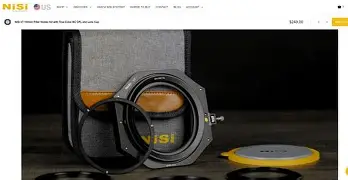
While the camera body captures the light, the Nisi V7 Filter Kit is designed to master it. Many photographers overlook the importance of high-quality filters, assuming that digital post-processing can replicate the effects of Neutral Density (ND) or Graduated Neutral Density (GND) filters. While software has come a long way, there are physical realities to light—specifically dynamic range and motion blur—that can only be handled at the front of the lens. The V7 kit is the evolution of Nisi's popular V6 system, featuring a refined holder design and a unique integrated True Color Circular Polarizer (CPL).
The V7 system is built for the 100mm filter standard, making it compatible with a wide range of lenses. The "True Color" polarizer is perhaps the most significant upgrade in this kit; it addresses the common "yellow cast" found in many older polarizers, ensuring that the blues of the sky and the greens of foliage remain natural and vibrant. The kit typically includes a selection of ND filters (like the 6-stop and 10-stop) and a Medium GND filter. For a landscape photographer, these tools are not optional; they are the difference between a blown-out sky and a balanced, professional-looking exposure.
Why Glass Quality Matters
The Nisi V7 uses optical-grade glass with nano-coatings that repel water and oil. In real-world use cases, such as shooting near a waterfall or the ocean, this is a lifesaver. Droplets bead off the glass, allowing you to keep shooting without constant wiping. More importantly, the lack of color cast across the ND range is crucial. Lower-quality filters often introduce a magenta or blue shift that is incredibly difficult to correct in post-production. With the V7, the files coming out of your camera—whether it's an X E5 or any other body—remain color-neutral, preserving the integrity of the sensor's color science.
Shop the latest Cameras & Photography picks on Amazon.
View Offers →Head-to-Head: Comparing the Impacts
To understand whether you should upgrade your camera or your filter system, we must look at the specific benefits each brings to the table. One offers better technology and speed, while the other offers control and precision over the elements.
| Feature/Capability | Fujifilm X E5 Upgrade | Nisi V7 Filter Kit Upgrade |
|---|---|---|
| Primary Benefit | Higher resolution, faster AF, and IBIS. | Control over exposure time and glare. |
| Image Quality Impact | More megapixels and better low-light ISO. | Superior dynamic range and smooth motion. |
| Workflow Change | Faster shooting and easier handheld work. | Slower, more deliberate tripod-based work. |
| Portability | Extremely portable body. | Additional bag space for holder and glass. |
| Longevity | Subject to digital obsolescence (3-5 years). | Physical tool; lasts as long as you have lenses. |
Pros and Cons: Fujifilm X E5
- Pro: Compact and lightweight design makes it the perfect "everyday" camera.
- Pro: The X-Trans sensor delivers some of the best skin tones and color reproduction in the industry.
- Pro: IBIS significantly expands the potential for handheld street and travel photography.
- Pro: Fast and reliable eye/face tracking for portraiture and candid shots.
- Con: Limited ergonomics for users with larger hands or heavy lenses.
- Con: Single SD card slot may be a deal-breaker for professional work requiring redundancy.
- Con: Battery life is still on the lower side compared to the larger X-T or X-H series.
Pros and Cons: Nisi V7 Filter Kit
- Pro: True Color CPL provides incredible polarization without the typical yellow shift.
- Pro: The "Push-and-Lock" slot system makes it very fast to insert and remove filters.
- Pro: Optical glass quality ensures no loss of sharpness, even on high-resolution sensors.
- Pro: Mechanical compatibility with almost all lens thread sizes via included adapter rings.
- Con: Requires a tripod to truly take advantage of the long-exposure ND filters.
- Con: Glass filters are fragile and require careful handling and cleaning.
- Con: The learning curve for using Graduated NDs correctly can be steep for beginners.
Buying Guide: Which Upgrade is Right for You?
The decision to upgrade should be driven by the "bottleneck" in your current work. If you find yourself missing shots because your camera is too slow, or if you find yourself leaving your camera at home because it's too bulky, the Fujifilm X E5 is the clear winner. It is a tool designed to remove friction from the act of taking photographs. It's for the person who wants to capture life as it happens, with enough power under the hood to print those captures large.
Conversely, if you already have a decent camera body but your landscape photos look "flat," or you can't seem to get those silky smooth water effects in broad daylight, the Nisi V7 Filter Kit is the more logical upgrade. This kit is an investment in the "quality of light." Interestingly, filters are often a "once-in-a-decade" purchase, whereas digital bodies are replaced much more frequently. If you want an upgrade that will still be useful when the Fujifilm X E10 comes out, the Nisi glass is the way to go.
Consider your primary subject matter:
For street, documentary, and family photography, the sensor and AF improvements of the X E5 will be felt in every single frame. The ability to shoot at ISO 6400 with minimal noise or to track a moving child’s eye across the frame is a mechanical advantage that a filter cannot provide. These photographers care about capture rate and spontaneity.
For landscape, architectural, and seascape photographers, the X E5 is just a box that holds the sensor. The real work happens in the highlights and shadows. A Nisi V7 kit allows these photographers to compress the dynamic range of a sunset, allowing the sensor to see details in both the dark foreground and the bright sky simultaneously. This is a physical solution to a physical problem, and it results in a "look" that is very difficult to fake with HDR software.
Real-World Use Cases
Imagine a travel photographer in Kyoto. They are walking through a crowded market. Here, the Fujifilm X E5 shines. They can tuck the camera into a small jacket pocket, pull it out, and the AF will instantly lock onto a craftsman's hands. The IBIS allows them to shoot at a 1/15th of a second shutter speed to blur the background crowds while keeping the subject sharp, all without a tripod. In this scenario, the Nisi V7 would be a hindrance, too slow to set up and too bulky to carry.
Now, imagine that same photographer at dawn by the Otagi Nenbutsu-ji Temple. Light is flooding over the hills, creating a massive contrast between the mossy statues and the rising sun. They set up a tripod. They slide the Nisi V7 holder onto their lens and drop in a 3-stop Medium Graduated ND filter to hold back the sky. They add a 6-stop ND to turn a nearby trickling stream into a soft mist. The X E5 is now just a tool to record the beautiful light that the Nisi system has organized. In this case, the filter kit is doing 70% of the heavy lifting for the final image quality.
Sustainability of the Upgrade
When we talk about "worth," we must talk about value over time. Technology in the mirrorless market moves at a breakneck pace. Sensors become more dense, processors become more efficient, and AI-driven features become standard. Buying an X E5 today means you are buying into the peak of 2026's APS-C technology, but in four years, there will likely be something significantly better. The depreciation on camera bodies is notoriously steep.
Shop the latest Cameras & Photography picks on Amazon.
Browse Now →Filters, however, are essentially "dumb" technology in the best way possible. A piece of high-quality optical glass that reduces light by 10 stops will perform exactly the same way in 2035 as it does today. The Nisi V7 holder is made of aviation-grade aluminum; it doesn't have software to update or a sensor to grow noisy. This makes it one of the most "sustainable" upgrades in photography. If you are looking for the best return on investment (ROI) in terms of gear longevity, the filter kit is the superior choice.
Deep Dive into the True Color CPL
One of the most frequent complaints regarding the Fujifilm ecosystem (and many others) is how difficult it is to manage highlights on bright, reflective days. Digital sensors have a linear response to light, and once a highlight "clips," that data is gone forever. This is where the Nisi V7's integrated True Color CPL becomes a secret weapon. Unlike standard polarizers that can sometimes add a muddy brown or warm yellow hue to the image—which clashes with Fujifilm’s famous "Classic Negative" or "Provia" simulations—the True Color CPL keeps the white balance pristine.
For the X E5 user, this means the film simulations look exactly as intended, but with the added benefit of removed glare from water, leaves, and glass. It increases color saturation naturally by removing "white light" reflections that wash out colors. If you shot a forest scene with the X E5 and no filter, and then again with the V7 CPL, the difference in the richness of the greens would be staggering. No amount of sliding the "Saturation" bar in an editing suite can recover the color hidden under reflected glare.
Conclusion
The Fujifilm X E5 and the Nisi V7 Filter Kit represent two different philosophies of improvement. The X E5 is an upgrade of capability—it allows you to shoot faster, in darker places, and with more accuracy. It is a masterpiece of modern electronics that makes the process of photography more seamless and enjoyable. It is the heart of a modern kit for someone who values portability and the latest tech.
The Nisi V7 Filter Kit is an upgrade of vision. It doesn't make the camera faster, but it makes the final image more professional. By controlling the physics of light, it allows you to create images that are physically impossible to capture with a bare sensor. It encourages a slower, more methodical approach to photography that often leads to better-composed and more thoughtful results.
Ultimately, is it worth upgrading? If your current camera feels like a barrier between you and the shot, the Fujifilm X E5 is a mandatory upgrade that will reinvigorate your love for the hobby. However, if you feel your images are lacking that "professional edge" and you're tired of fighting with blown-out skies and flat colors in post-production, the Nisi V7 Filter Kit is the most impactful investment you can make. In the spec battle between a faster brain and better eyes, the winner depends entirely on what you choose to look at.