The Ultimate Setup Guide for Your Khadas Mind 2S Mini Pc
Introduction
The Khadas Mind 2S Mini Pc has emerged as a versatile compact computer for hobbyists, developers, and anyone seeking a small but capable machine for home office, media playback, edge computing, or light server duties. This guide walks through everything a prospective owner or new unboxer needs to know to get the Mind 2S ready for real-world use: an honest analysis of strengths and trade-offs, practical setup steps, recommended configurations for common use cases, a comparison with other small-form-factor options, and a concise buying guide outlining what to prioritize.
Detailed Product Review and Analysis
Design and Build
The Mind 2S aims to balance a compact footprint with sufficient connectivity. The chassis typically focuses on minimizing desk space while keeping essential ports accessible. The physical layout usually places the most-used connectors (HDMI, USB, or Ethernet) in intuitive locations to simplify cable management for desktop or media-center installations. For buyers who value aesthetics, the low-profile housing often blends into home-theater racks; for those prioritizing function, quick access to internal expansion (M.2 slot or memory access) is a major plus when present.
Performance and Real-World Responsiveness
Performance expectations should match the intended workload. The Mind 2S is well suited to everyday productivity (web browsing, office workloads), local media streaming, and lightweight development tasks. For buyers considering more demanding workloads—such as high-end gaming, large-scale virtual machines, or heavy video editing—a desktop-class machine remains preferable. That said, the Mind 2S is frequently chosen for tasks where a balance of energy efficiency, compactness, and respectable compute capability matter: home labs, CI runners for small projects, lightweight container hosts, and edge inference for small neural models (when supported by the hardware and drivers).
Ports, Expansion, and Connectivity
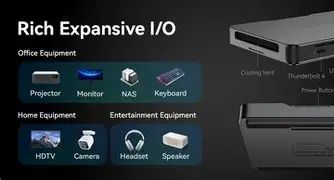
Connectivity is a core part of the Mind 2S proposition. Most small-form-factor machines prioritize a mix of USB (Type-A and/or Type-C), HDMI or DisplayPort output, gigabit Ethernet, and wireless options like Wi‑Fi and Bluetooth. Expandability—often delivered via an M.2 slot (NVMe or SATA), soldered or socketed RAM, and occasionally a SATA connector—determines how future-proof the system will be. Buyers who plan to turn the mini PC into a NAS-like device or run many containers should prioritize models with NVMe support and sufficient RAM headroom.
Thermals and Noise
Thermal design is a frequent trade-off in compact PCs. The Mind 2S typically uses a small heatsink and an active fan or passive cooling strategy depending on the configuration. For continuous heavy loads, buyers should expect elevated temperatures and potentially higher fan speeds; for lighter daily use, a near-silent experience is common. If quiet operation is a priority, choosing an option with a larger passive heatsink or configuring software fan curves (where firmware/OS support exists) can help.
Software Support and Ecosystem
Software support is where the user experience is made or broken. The Mind 2S commonly supports mainstream Linux distributions (Ubuntu, Debian based variants) and sometimes alternative OS images built by the community. Official firmware and driver availability—particularly for specialized components such as NPU accelerators or hardware video decoders—affect how straightforward it is to enable advanced features. A healthy community, accessible documentation, and active firmware updates significantly improve long-term usability.
Common Real-World Use Cases
- Home office / remote work: Smooth productivity with multiple displays, lightweight virtualization, and reliable networking.
- Media center: Quiet 4K playback, hardware-accelerated video decoding (when supported), and streaming client/server duties.
- Home lab / developer box: Local container development, small CI runners, and testing environments for distributed systems.
- Edge AI and inference: Local inference for small models using dedicated accelerators or CPU optimizations where hardware drivers are available.
- Network appliances: Edge routing, VPN endpoints, and lightweight NAS duties when paired with adequate storage.
Pros & Cons
- Pros
- Compact footprint that saves desk or rack space.
- Energy-efficient operation suitable for always-on tasks.
- Good balance of ports for peripherals and displays.
- Expandable storage options in many configurations (M.2/NVMe).
- Often strong community support with tutorials and images for popular OSes.
- Cons
- Limited raw performance compared with full-size desktops—less suitable for sustained heavy workloads.
- Thermal limitations under sustained high load may cause throttling or higher fan noise.
- Upgradeable RAM may be limited or soldered in some SKUs.
- Advanced features (NPUs, hardware codecs) can require manual driver installation or vendor-supported images.
Comparison: Khadas Mind 2S vs Other Mini PCs
| Feature | Khadas Mind 2S | Intel NUC (compact Intel mini PC) | Raspberry Pi 4 |
|---|---|---|---|
| Target use | Balanced small-form-factor compute, media, edge tasks | General desktop workloads, higher single-thread performance | Hobbyist projects, lightweight server tasks, education |
| CPU class | ARM/SoC or compact PC-class SoC (energy efficient) | Intel Core or Celeron (x86) | ARM-based Broadcom SoC |
| Expandability | Often M.2 NVMe, some models support RAM upgrades | Typically supports M.2 and user-swappable RAM/SSD | MicroSD primary, limited external NVMe with hat adapters |
| OS compatibility | Linux distributions and vendor images; check drivers | Wide compatibility with Windows and Linux | Linux variants and Raspberry Pi OS |
| Best for | Media center, edge compute, compact desktop | Desktop replacement, heavier workloads | DIY projects, education, low-cost servers |
Step-by-Step Setup Guide
1. Unboxing and Initial Check
Begin by verifying the package contents: the mini PC unit, power adapter, any included storage or RAM modules, and documentation. Confirm that the model matches the intended SKU—check the label for RAM/storage options since some variants are sold as barebones while others include memory and storage. Keep the packaging for returns during the initial testing period.
2. Firmware and Documentation
Before installing an OS, review the official documentation and firmware release notes. Firmware updates can resolve compatibility issues with displays, USB devices, and wireless modules. If a firmware (UEFI or vendor-specific bootloader) update is available, follow the vendor’s documented procedure to flash it. Back up any shipped storage images if the device arrives preloaded with an OS.
3. Storage and Memory
If the Mind 2S has an accessible M.2 slot, install a recommended NVMe SSD for maximum responsiveness. For tasks requiring many containers or media libraries, choose a larger-capacity drive. If memory is user-upgradeable, install as much RAM as the system supports—8–16GB is sensible for multitasking and container workflows; 4GB can be acceptable for a dedicated media center or single-purpose server.
Looking for the best Laptops & Computers deals on Amazon?
See Deals →4. Choosing and Installing an Operating System
Select an OS aligned to the intended role:
- Linux desktop (Ubuntu, Fedora): Best for general-purpose development and desktop use. Choose an LTS release for stability.
- Headless Linux server (Debian, Ubuntu Server): Ideal for home lab, server duties, and container hosts.
- Vendor images or community builds: Use these when needing hardware acceleration (video decode, NPU); they often include device-specific drivers out of the box.
Create a bootable USB installer using standard tools (Etcher, Rufus, or dd) and ensure the installer matches the hardware architecture. Boot to the installer, verify storage visibility, and follow the distribution’s installation steps. If dual-booting, partition carefully and keep a recovery image.
5. Driver and Hardware Acceleration
After OS installation, check dmesg and the system log for missing firmware or driver errors. Install vendor-recommended drivers for Wi‑Fi, Bluetooth, and any hardware accelerators. For media playback, enable hardware video decoding (VA-API, V4L2, or vendor-specific APIs) to reduce CPU usage and improve playback smoothness. For AI inference, install the proper runtime and drivers if the board exposes an accelerator and the vendor supplies a userland SDK.
6. Network and Remote Access
Configure wired or wireless networking and set a predictable hostname. For headless setups, enable SSH for remote administration and consider setting up dynamic DNS if remote access over the internet is required. For production-facing services, lock down SSH (disable password auth, use keypairs) and configure a firewall to limit exposure.
7. Power, Performance, and Thermal Tuning
Set a sensible power policy—many distributions allow CPU governor tuning (performance vs. powersave) and frequency limits, especially important for thermal management. If thermal throttling is observed under sustained load, consider improving airflow, using a passive heatsink upgrade (if available), or lowering sustained clock targets. Use monitoring tools (htop, sensors, or vendor tools) to track temperatures and fan speed.
8. Backup and Recovery
Create a recovery image of the installed system once the configuration is stable. For media servers, automate backups of metadata and critical media indexes. For development machines, document installed packages and snapshots of important containers or virtual machines.
9. Role-Specific Tips
- As a Media Center: Install a lightweight media center application, enable hardware video acceleration, and tune audio output to match receivers. Use fixed IP addressing or DHCP reservation for consistent network shares.
- As a Home Server / NAS: Pair the unit with external or internal NVMe/SATA storage, configure Samba/NFS for file sharing, and use RAID or replication strategies for redundancy.
- For Development / Containers: Install Docker or Podman, allocate swap and tmpfs appropriately, and use an external SSD for fast container image IO if necessary.
- For Edge AI: Install the vendor SDK or community runtimes, convert models to optimized formats (ONNX/TFLite) where applicable, and benchmark using small representative workloads to tune the inference pipeline.
Buying Guide: What to Consider Before Purchasing
Choosing a Khadas Mind 2S or any mini PC should start with a clear sense of intended use. The following criteria will help align the purchase with expectations:
1. Intended Workload
Define primary tasks: media playback, light desktop work, server duties, or edge inference. Pick a configuration with enough RAM and a responsive storage option (NVMe if possible) for those tasks.
Discover deals on Laptops & Computers — updated daily.
Shop Amazon →2. Expandability
Check whether RAM is soldered or socketed and whether an M.2 slot is present for NVMe SSDs. If future upgrades are anticipated, prefer SKUs with user-accessible expansion.
3. Port Selection
Verify the availability of required ports (USB Type-A/Type-C, HDMI, Ethernet). For multi-display setups, ensure the device supports multiple video outputs or use USB-C/DisplayPort alternatives.
4. OS and Driver Support
Confirm official or community support for the preferred OS. If reliance on hardware-specific features (video decode, NPUs) is expected, verify driver availability and maturity.
5. Thermals and Noise
Look for user reports on thermal behavior and fan noise, especially if the device will operate in quiet environments like living rooms or bedrooms.
6. Community and Documentation
A strong community and clear documentation significantly reduce setup friction. Check forums, GitHub repositories, and the vendor’s documentation portal for installation guides and troubleshooting notes.
7. Warranty and Support
Compare warranty terms and vendor support channels. For mission-critical deployments, consider extended support options if offered.
Conclusion
The Khadas Mind 2S Mini Pc is a pragmatic option for those who need a compact, energy-efficient computer that can serve a variety of roles: a home media hub, a compact development machine, a lightweight home server, or an edge device for constrained inference. Success with the Mind 2S depends less on raw claims and more on matching the right configuration to the job, keeping firmware and drivers current, and applying sensible thermal and power tuning for sustained workloads. With careful selection of storage, RAM, and OS, and attention to community-backed setup guides and vendor documentation, the Mind 2S can be a reliable and flexible addition to a modern small-form-factor toolkit.